The Independence Monument in Mexico City is more than just a commemorative work. It is a symbolic body in constant transformation. For over a century, the Winged Victory has watched over the city's public life from above: celebrations, marches, mourning, protests, parades, victories, intimate encounters, and collective demonstrations.
Raised atop the honorary column, she holds a laurel wreath and a broken chain with three links. She represents triumph, independence, and liberation. Yet, her meaning does not remain fixed. Each generation returns to look at her, occupy her, and redefine her. The monument thus ceases to be a static piece of official history and becomes a living symbol where memory, identity, desire, power, and belonging intersect.
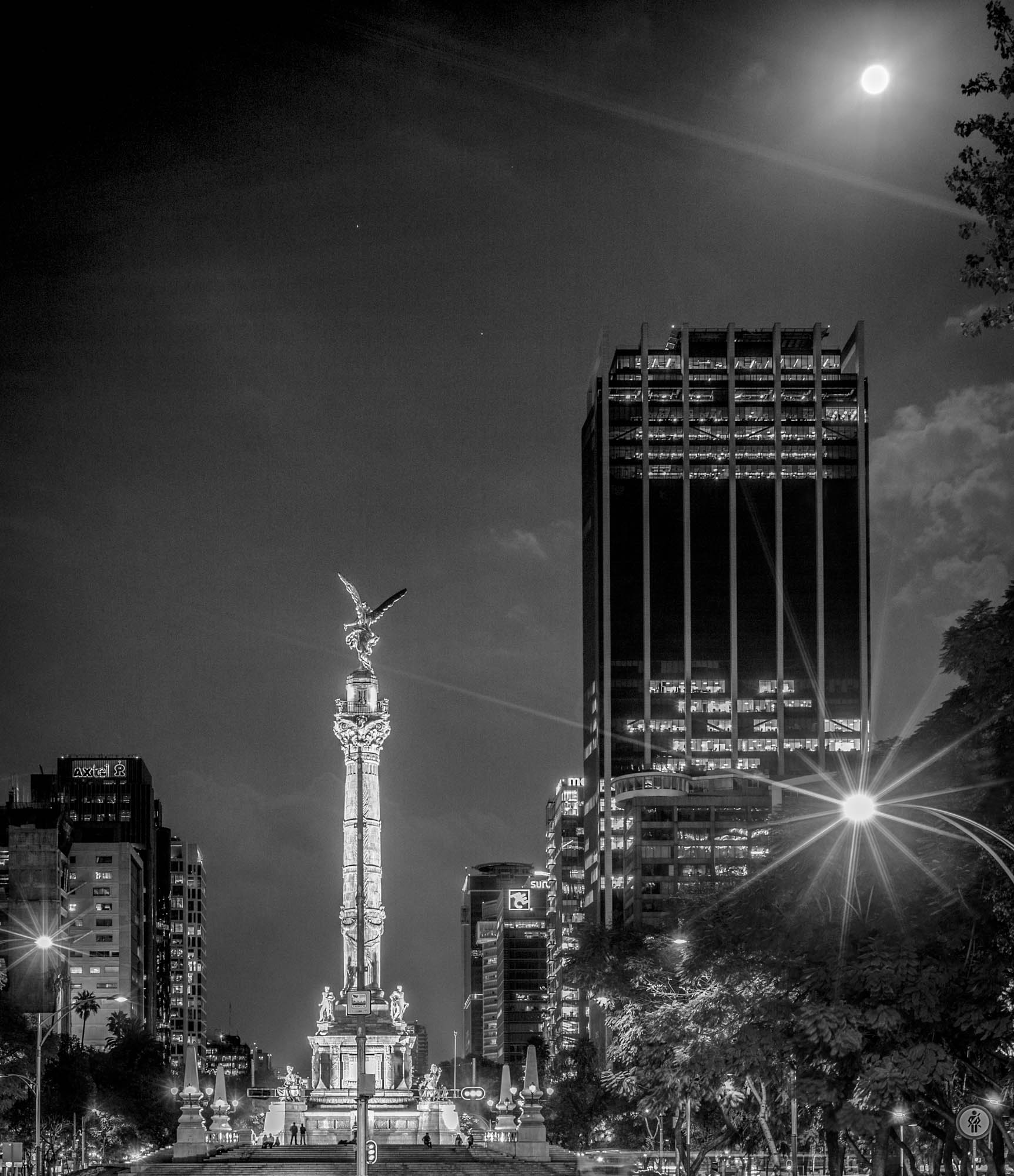
This series begins with a question: how do we reinterpret a symbol that has witnessed the last 117 years of the city's history?
The physical act of looking up also becomes a symbolic gesture. The city raises its gaze toward what it aspires to be: free, just, visible, celebrated. Yet, around the monument, the tension between ideal and reality also emerges. The Winged Victory embodies a promise; its permanence reveals the contradictions, wounds, and hopes of a society in motion.
Through an interpretive and poetic lens, the project explores the symbolic transformation of the Winged Victory based on the events, imaginaries, and visual languages that have shaped the city. The figure of the angel appears as a constant yet mutable presence: an icon that remains, but whose meaning shifts according to the historical time, social context, and artistic sensibility through which it is viewed.
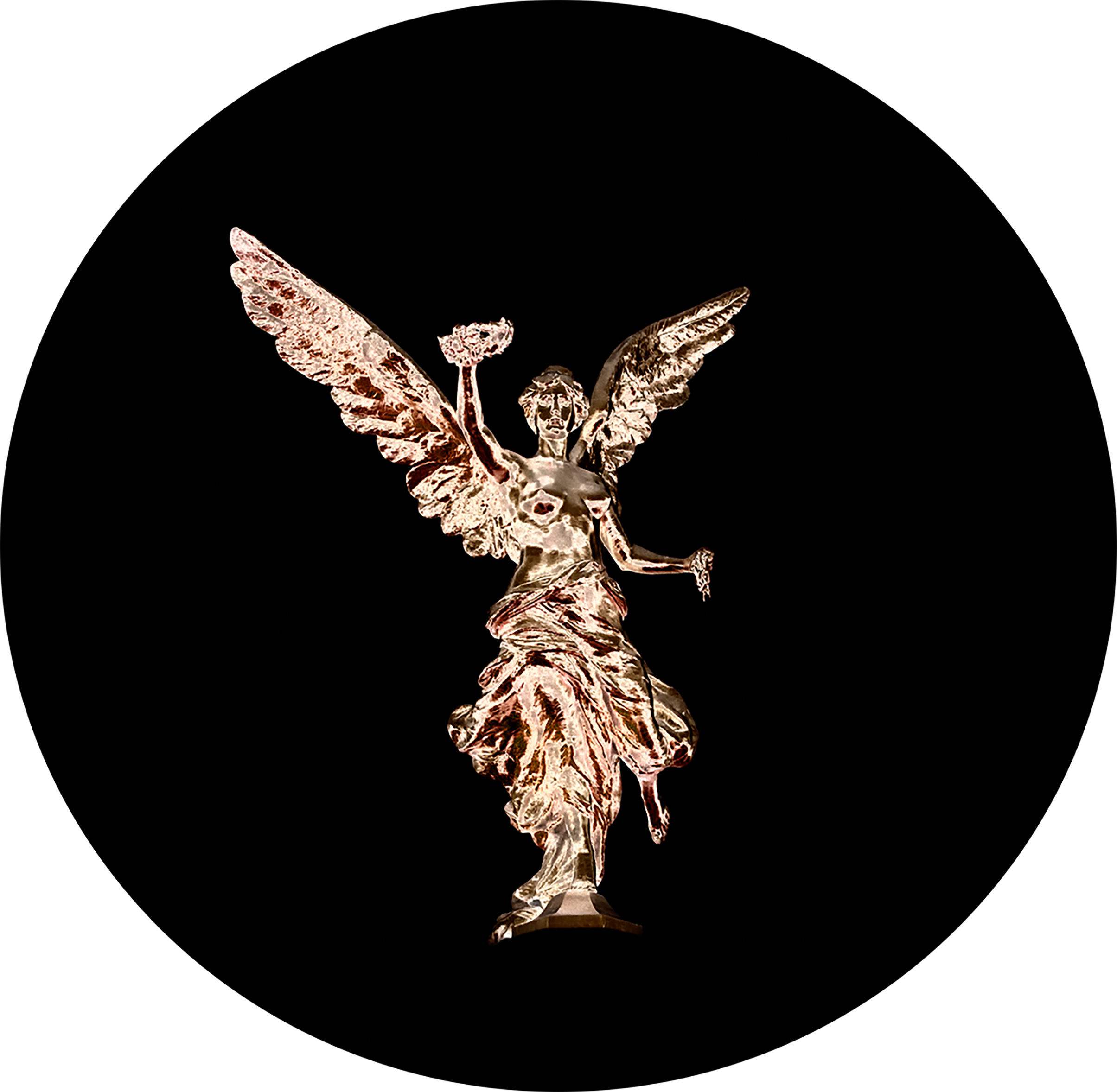
The series does not seek to portray the monument as an architectural object, but rather to explore how a public image can contain multiple layers of memory. In each interpretation, the Winged Victory ceases to be merely an allegory of triumph and becomes a silent witness to celebrations, tensions, losses, urban transformations, and collective narratives.
At this intersection of history and the present, symbol and interpretation, document and artistic language, the Winged Victory shifts from official history toward a more open and contemporary reading. It no longer appears solely as an emblem of independence, but as a living image, capable of engaging with different times, styles, and events.